
by Kim Doner
Have you ever observed how much animals differ from one another in how they’re designed to survive? For instance, look at all the various ways their limbs end (if they have limbs): flippers, paws, hands, wings, hooves…. Some of those endings present as just extensions of flesh, others expand into digits, and others into hard, thick nails.
Form Follows Function
In nature, the rule is “Form follows function.” The development of paws befits what the animal needs. To mention a few:
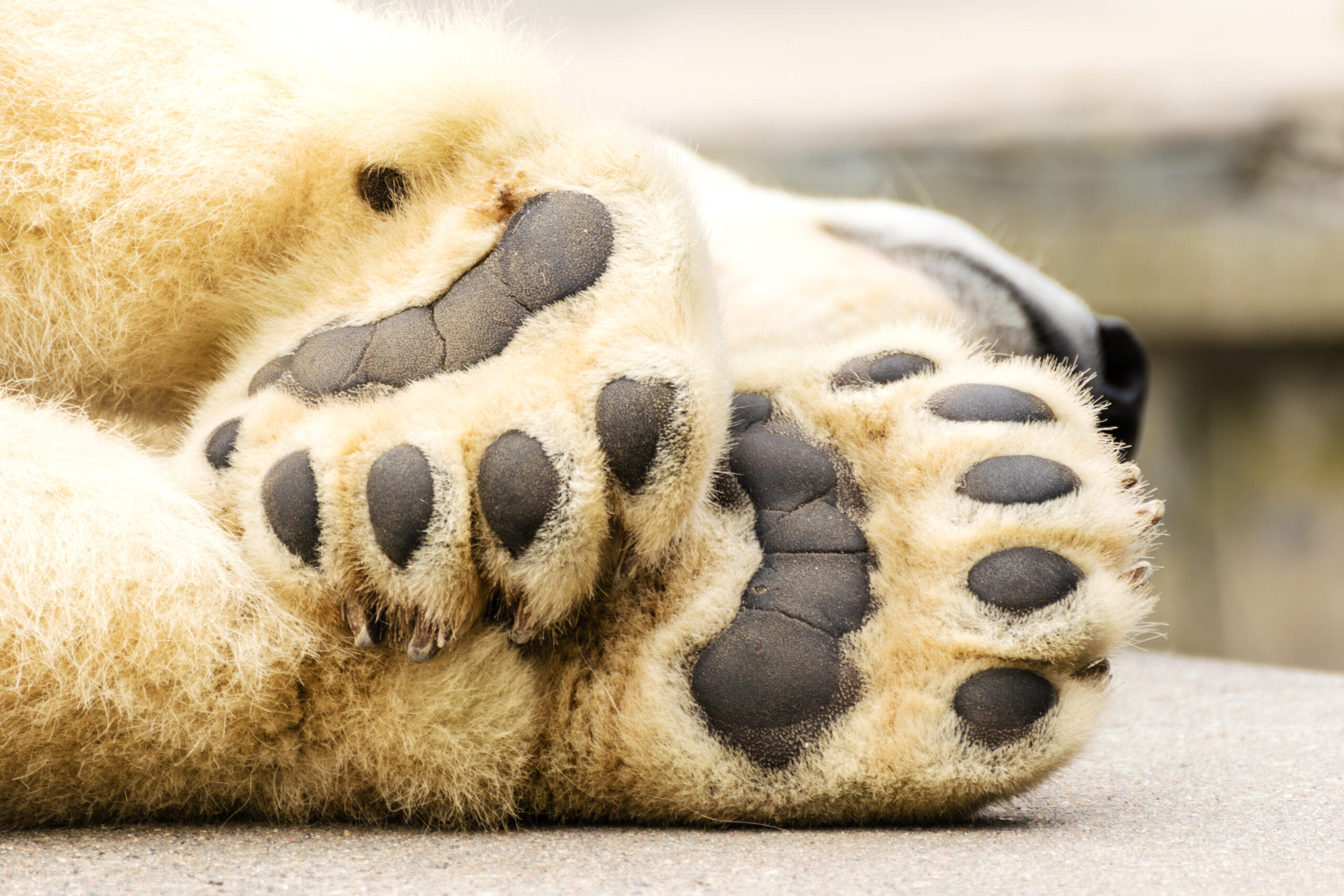
Polar bears have paws with a diameter of as much as 12 inches. That is not only for housing enormous claws but also for spreading the animal’s weight over thinning ice or fresh snow and possibly helping propel them through water. All those abilities help with catching prey and avoiding dangers.
Elephants have flat feet (they’re the only adult mammal that can’t jump, which is a survival mechanism to avoid a threat, but one an adult elephant would hardly need), but they also have toenails (but no toes — go figure). Those flat feet help pound down the earth elephants walk on, allowing rainwater to create water holes. The toenails provide a soundboard that helps with hearing.
Truth: Elephants “hear” with their feet. Their soles have what are called Pacinian corpuscles, sensory receptors that pick up seismic vibrations. We’ve already learned that elephants communicate with each other through infrasound, but their calls also vibrate through the soil. Herds have been observed moving to higher ground prior to tsunamis after graphs showed seismic activity.
Rabbits don’t have paw pads; their feet are furred because they tend to live in softer, diggable terrain. They burrow with front claws and push off with back claws and powerful hind legs. Their foot fur maintains warmth and distributes weight for faster getaways.
Raccoons have supersensitive front paws encased by a thin horny layer of skin containing vibrissae, which are long hairs with deeply connected nerve endings. Getting the paws wet enhances sensitivity, to the point that raccoons can almost “see” with their fingers. Because they scoop through muddy ponds for their favorite foods of fish, frogs, and mollusks, that comes in handy when the dinner bell rings.
A favorite scene of mine in the popular Looney Tunes cartoon series is when Bugs Bunny is being chased by “the monster” (named Gossamer, for all you animation nerds). In a typical manner, Bugs magically draws up a table and chairs, then proceeds to adopt the role of a manicurist, buffing the claws on his client and nattering on about how “IN-teresting” the life of a monster must be.
Nailing It
Nails — for us humans — present in a variety of forms for other creatures. Any such hard shape growing from a foot, hand, claw, hoof, or paw is comprised primarily of alpha-keratin, a dense protein that develops from the epidermis (or skin) layer of the body. The outer layer of a nail is quite tough and nerveless, made of packed dead cells, and the inner layer at the core of a claw has a layer with a rich blood supply called the quick. It’s there, in the matrix, that keratinocytes — the living cells that create a nail — will mature and ascend into the packed layer above, creating a claw or nail.
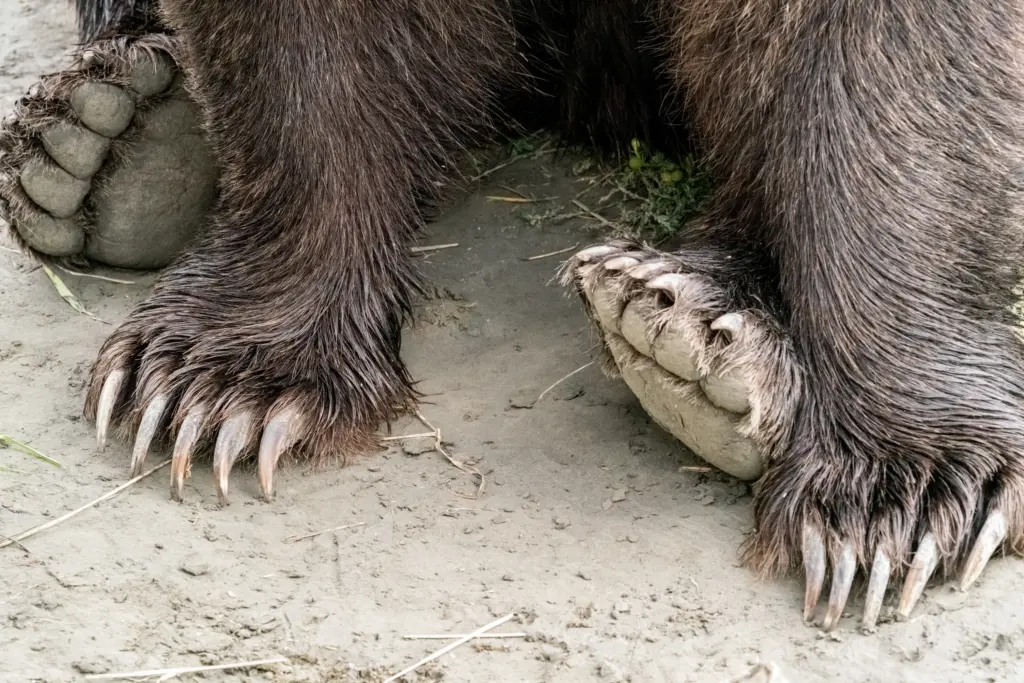
The shape of claw or nail depends on the shape of the bone at the end of the digit. In humans, those bone tips are somewhat square and flat, so our nails grow that way. In predators, raptors, and many other animals, the claws (or talons) conform to the narrow finger bones — the distal phalanges — and grow, wrapping around them, creating a conical shape. Many felines can retract those claws at will, but bears and dogs can’t.
It’s believed that we humans had conical nails — claws — that evolved into today’s fingernails. Because primates needed wide finger bones and flat pads when grabbing tree branches, fingernails eventually flattened to become a backing for the animal’s grip, improving dexterity as well as hand strength.
Compared to most other critters that grow nails and claws, we humans are quite inferior. Komodo dragons have two-inch claws to help drag their prey down, and their bites are a mixture of venom and high counts of bacteria. Other predators with good-sized grabbers are Siberian tigers and grizzly bears; they are neck-and-neck in competition, sporting four-inch claws at the ends of powerful front legs.
One would expect an apex predator to have the longest claws around, but no. That honor goes to the giant armadillo, coming in at eight inches.
As for birds, the avian family has toes that grow and splay as a base for them to walk or perch; the correct term for their nails is talons. The harpy eagle and the cassowary both have five-inch talons, but the cassowary is the only one known to have killed humans through a well-placed kick. Just looking at one is unsettling because they resemble dinosaurs so much.
Speaking of dinosaurs, the longest known claws in history belonged to the therizinosaur. Those big boys had 20 inches of claw curving at the tips of their three fingers; it’s thought they used them for snagging foliage.
Perhaps the Looney Tunes writer would want that fact for a cartoon sequel. I’d love to see how Bugs would “handle” it.