by Mary Green
One often overlooked skill in dog training is teaching dogs how to settle, self-regulate and relax on their own. Perhaps your dog was crated all day while you were at work and now needs something to do, or you want to enjoy a book or a program without interruption from a pestering pup. Food-delivery toys are one of our favorite tools for building this essential life skill in a positive, enriching way.
What Is a Food-Delivery Toy?
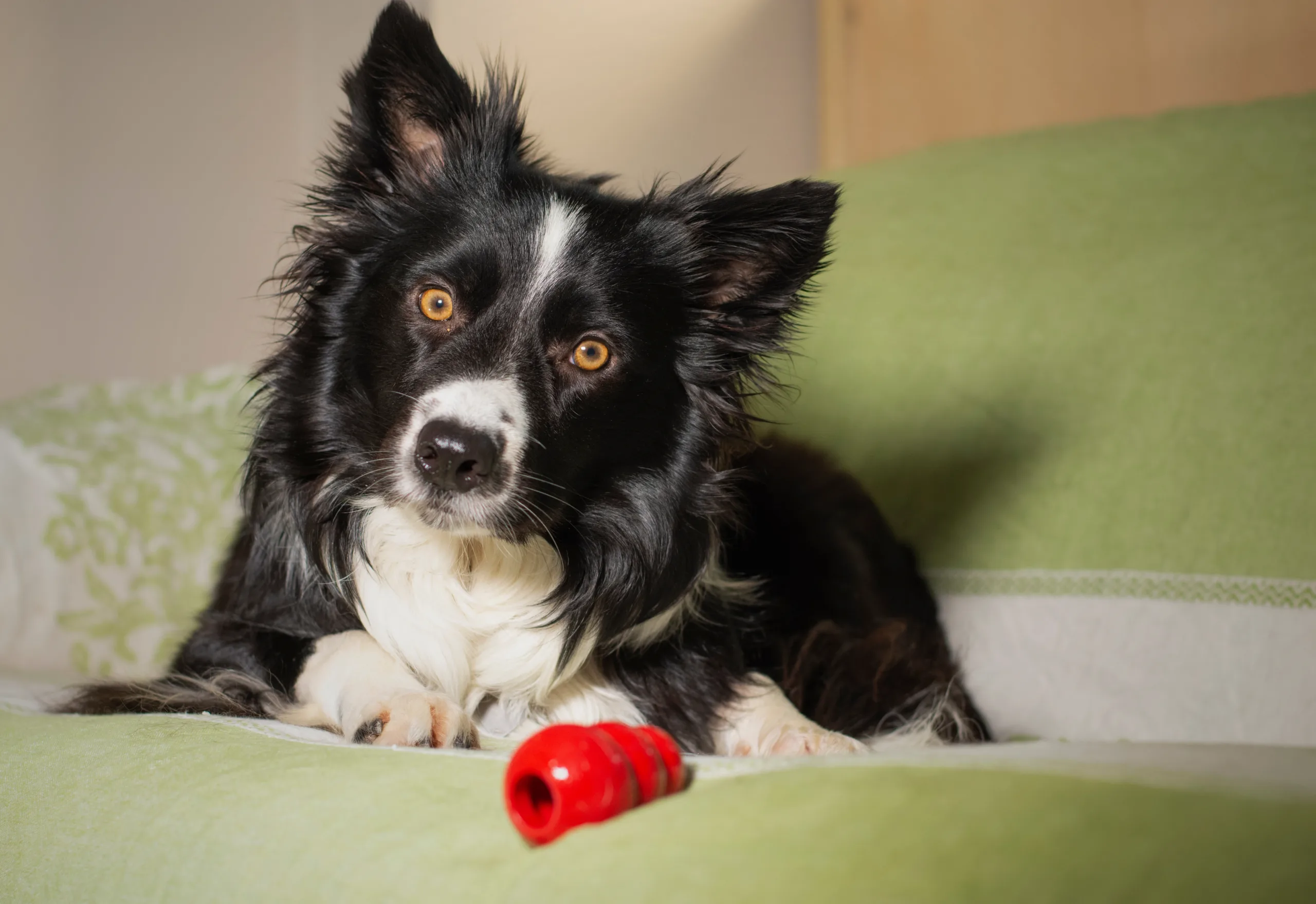
A food-delivery toy is different from a traditional chew toy. It’s a safe, interactive vessel that can be filled with kibble or soft, tasty foods. Instead of eating quickly from a bowl, your dog must work to access the food, encouraging calm focus, problem-solving and emotional regulation.
Food-delivery toys are mostly used during crate time or other managed confinement. However, I find that many dogs enjoy a stuffed food toy in the company of their human companion. Food-delivery toys are also a useful tool when traveling, helping alleviate boredom when physical exercise is limited.
Using Food-Delivery Toys with Puppies
For puppies, we like to follow the Rule of Threes:
- One-third hand-fed during training in short, fun sessions throughout the day.
- One-third fed from a bowl.
- One-third delivered through a food-delivery toy during confinement (crate or kennel time).
Everyday Benefits
Food-delivery toys provide appropriate enrichment when you need your dog to settle calmly, whether daily or occasionally. When it is too cold or rainy to go for a walk or play outdoors, a food-delivery toy is just the thing to keep him content and busy.
Cooperative Care & Husbandry
Food-delivery toys — especially Licki-Mats — are excellent for nail trims, baths and grooming. Licking has a calming effect and supports cooperative care.
Safety note: Smearing food on yourself to distract your dog is unsafe and not recommended, no matter what you have seen on the internet!
Snuffle Mats & Slow Feeders
Snuffle mats and snuffle balls encourage natural foraging behavior and are especially helpful for dogs who eat too fast. These tools are not designed for chewing and should be supervised.
Multi-Dog Households & Resource Guarding
- Use food toys only when dogs are separated.
- Pick up toys immediately when empty.
- If guarding occurs, remove the dog from the toy — never the toy from the dog. (Many dogs will fiercely guard an empty food-delivery toy.)
Food-delivery toys support calm behavior, independence and emotional well-being as part of a balanced enrichment plan.
Mary Green is a Certified Professional
Dog Trainer Knowledge Assessed (CPDT-KA), Certified Dog Behavior Counselor (CDBC), and Certified Nose Work Instructor (CNWI) at K9 Manners & More in Broken Arrow, Oklahoma.
Top 5 Food-Delivery Toy Stuffing Recipes
- Classic Calm Combo
- Kibble (soaked) mixed with canned pumpkin or unsweetened applesauce
- Gentle, simple and great for everyday use
- Power Protein Mash
- Canned dog food or cooked turkey/chicken with a splash of water
- High value without being overly rich
- Yogurt Berry Freeze
- Plain Greek yogurt mixed with mashed blueberries or strawberries
- Cooling and long-lasting when frozen
- Peanut Butter Puzzle
- Xylitol-free peanut butter mixed with kibble or crushed dog biscuits
- Sticky texture increases engagement time
- Leftover Treasure Hunt
- Small amounts of dog-safe leftovers mixed with kibble
- Adds variety while reducing waste
PREP & STORAGE TIPS
- Prepare multiple toys at once and freeze.
- Plug openings before freezing to slow access.
- Always supervise new foods and toys.