
Story and photos by Nancy Gallimore
It’s 5:30 at Walmart on a Friday afternoon. This is a terrible time to be Walmarting. Everyone is getting off work and rushing in for weekend provisions. Me? I’m staring at a display full of baby bottles. So many choices.
I find myself feeling the same level of confusion I felt on the first day of Algebra II in high school. Then it was because I wasn’t great at math. Now it’s because I’ve never been an actual mom, so we are standing in very foreign territory. Let’s face it, I’m far closer to having to figure out Medicare than I am to being in my childbearing years.
How did I arrive here? Well, back up about 48 hours to a post on Facebook about an orphaned litter of Australian Cattle Dog puppies. It kept popping up when my nonprofit, Tails You Win K-9 Rescue, was tagged repeatedly. So I stuck a toe in the water and replied to a message from a friend trying to find help for the little family.
After a little back and forth, I agreed that partner Jim and I (and yes, for once I talked to him before I ran to get the dogs) could take two of the puppies. Newborn puppies are best raised with at least one sibling for optimal mental and physical health. Two little bottle babies wouldn’t be too hard, right?
This leads us back to the baby bottle aisle. I was panic shopping because the puppy bottle purchased at the animal supply store was either causing the puppies to struggle to nurse or it was flooding them with formula. We were all frustrated. On the advice of a veterinarian friend, I finally selected a bottle designed for premature human babies. The packaging touted anti-colic properties and an air-free vent (whatever that is).
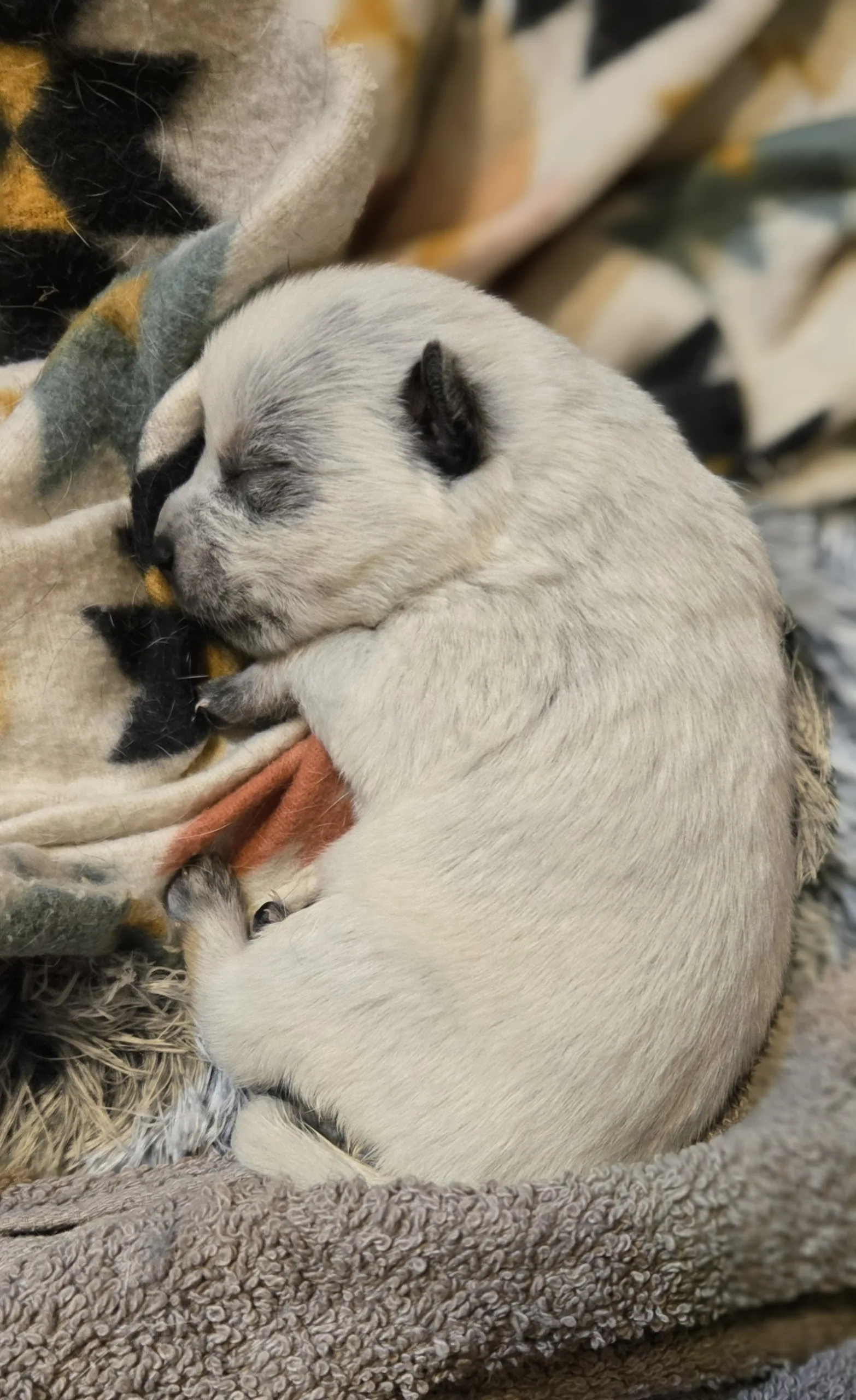
I’m pleased to tell you this bottle was the ticket to puppy nursing bliss. Our snow-white puppies filled their bellies and fell into formula-induced comas. Our first new parent challenge was conquered.
I have gained deep appreciation for mothers of all species. Newborn puppies need to eat about every three hours around the clock. And some of those feedings land during times normally reserved for slumber. It’s a treat to be jarred awake by an alarm at midnight and 3 a.m.
I also kept feeling remorse over the kind woman who initially cared for the septuplet litter and still had five hungry mouths to feed. Thankfully, relief came within a couple of days as two more wonderful foster families volunteered to take puppies, one accepting a pair and one taking three tiny charges — a demanding but manageable distribution.
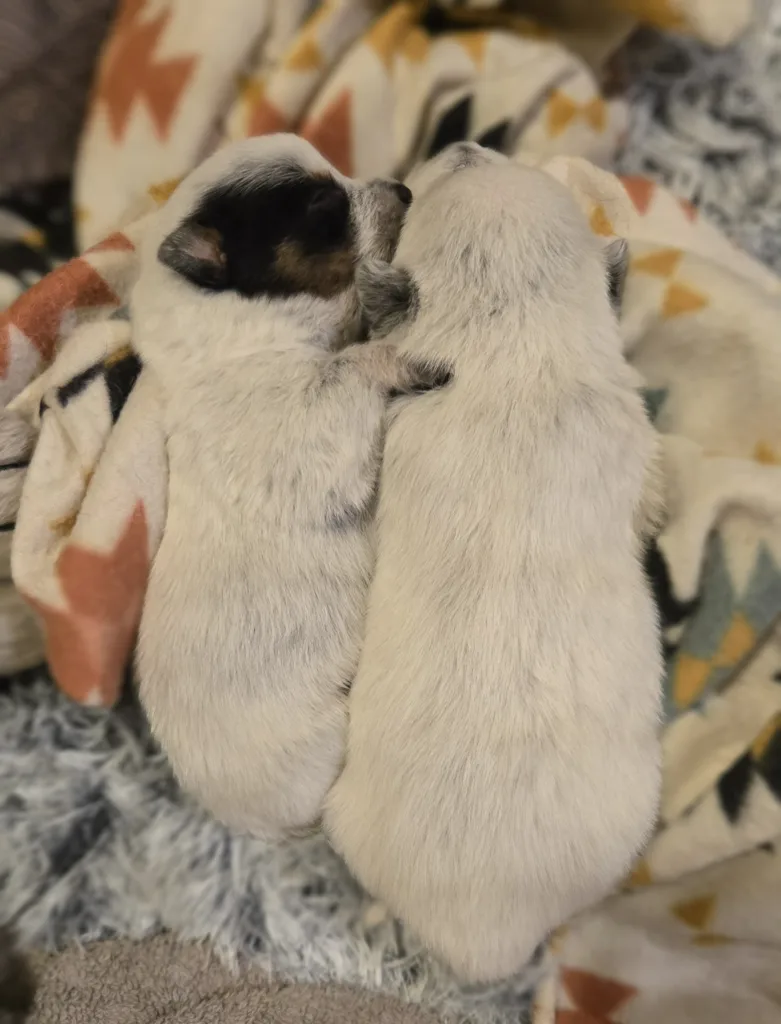
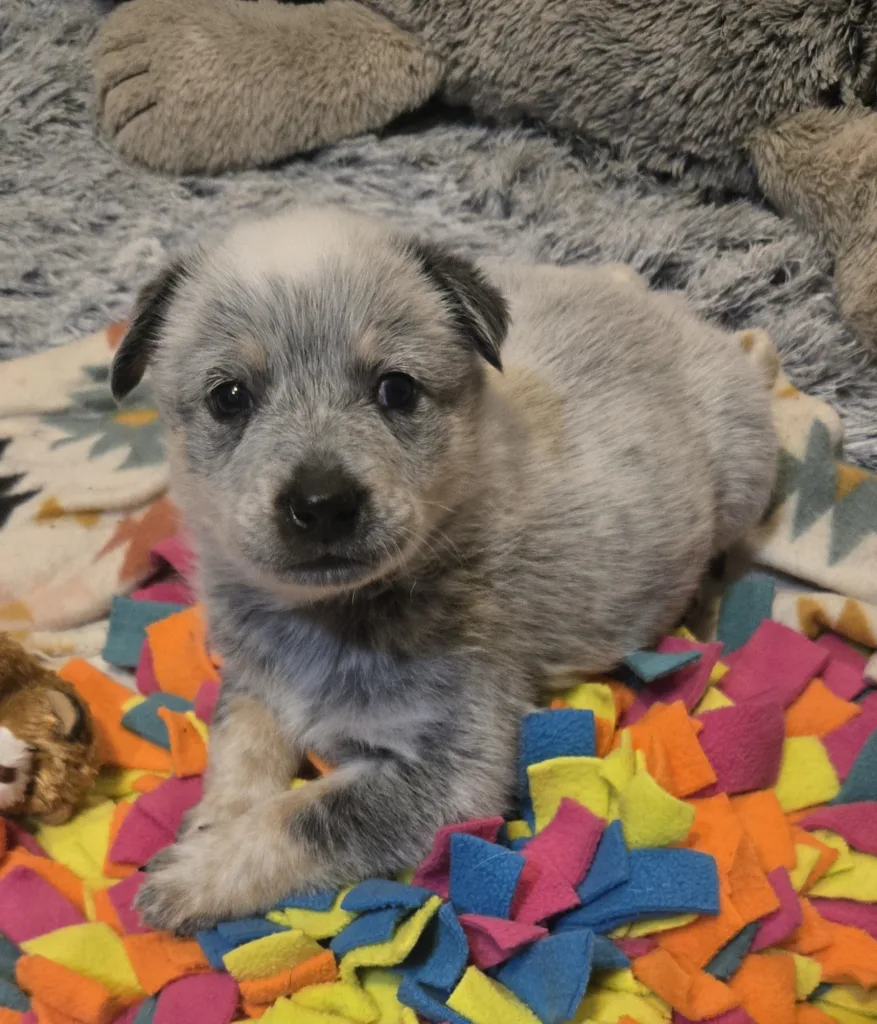
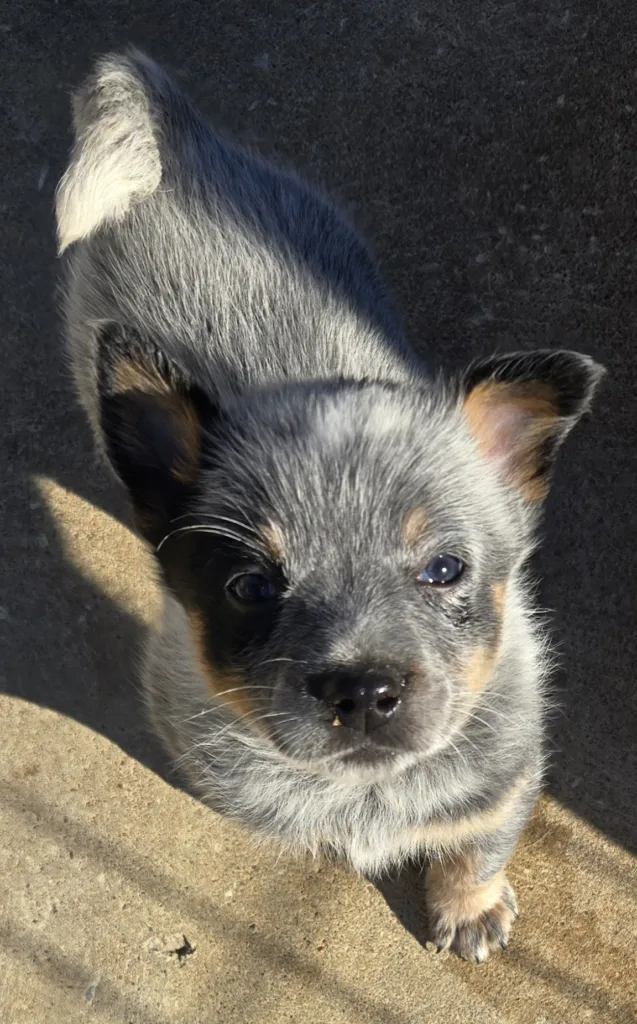
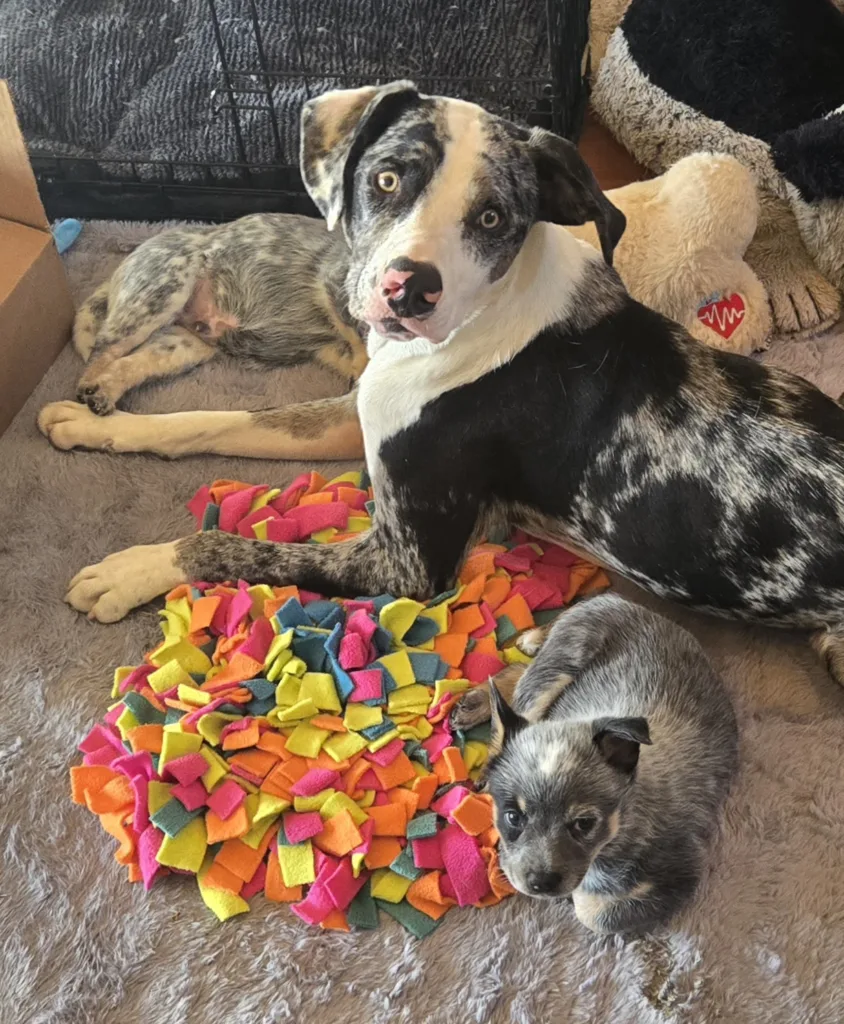
The puppies are now approaching the five-week mark, and oh, the changes we are experiencing. The once helpless polar bears now have open eyes that don’t miss a thing. Gray fur has blended with white to create the trademark Blue Heeler coloring. Puppies who initially belly-crawled are up and exploring with growing agility. And babies who once needed assistance to answer nature’s call (there is a reason mom dogs lick puppies often and vigorously; we opted to use damp washcloths) are heading to piddle pads to relieve themselves with increasing accuracy.
My two little geniuses, now known as Bolt and Penny, have also mastered the art of eating on their own — 3 a.m. bottles, a thing of the past. Do I miss the night feedings? No. But oddly, also yes. This childless-by-choice adult may finally understand a minuscule fraction of the up and down emotions new moms experience.
Taking on orphaned puppies is a demanding task. Not just the obvious part of providing for their physical needs but also making sure their intellectual and social needs are met. Clumsy two-leggers are no match for what momma dogs bring to the puppy pen. We can’t possibly mimic the life lessons their bio mom would have delivered, but we must make every effort to help her puppies grow into well-adjusted young dogs.
Thankfully, I have several nanny dogs in my home who are ready and oh-so-willing to step in to play with and occasionally gently school our furry toddlers. And we will continue to do our best when two foster puppies become seven.
As their siblings, three more girls and two boys, fully abandon bottle feedings, they will return to our home to spend their last few weeks together, growing, playing and learning more important stuff about how to be a dog. Those weeks will be filled with fun, chaos and endless messes.
There will be vet visits and socialization outings to help our puppies stay healthy and grow in confidence. Hopefully, we’ll also get a jumpstart on house training and a few other lessons in preparation for their transition to new families.
Then, at 2 months of age, the seven will dwindle to none as we select wonderful homes for each of our babies. We will pack little puppy bags, kiss each furry head and send them into the world to be the best little Cattle Dogs they can be.
I look over into the adjacent puppy pen where Bolt and Penny are deep in midmorning slumber. Bolt is on his back with his front paws twitching slightly in dream-induced play, while Penny is curled into a little donut on the plush bed inside their crate. This is the calm before the full-litter storm.
Like all good parents, Jim and I will love each pup fiercely, but then with seven sharp tugs at our heartstrings, we will let them go. This roller coaster canine parenting ride will conclude after eight short weeks, and new humans will step in to pick up where we leave off.
And to think you human parents keep this up for 938 weeks. Kudos to you. You’re made of tougher stuff than I am. Hug your two- and four-legged puppies close.