
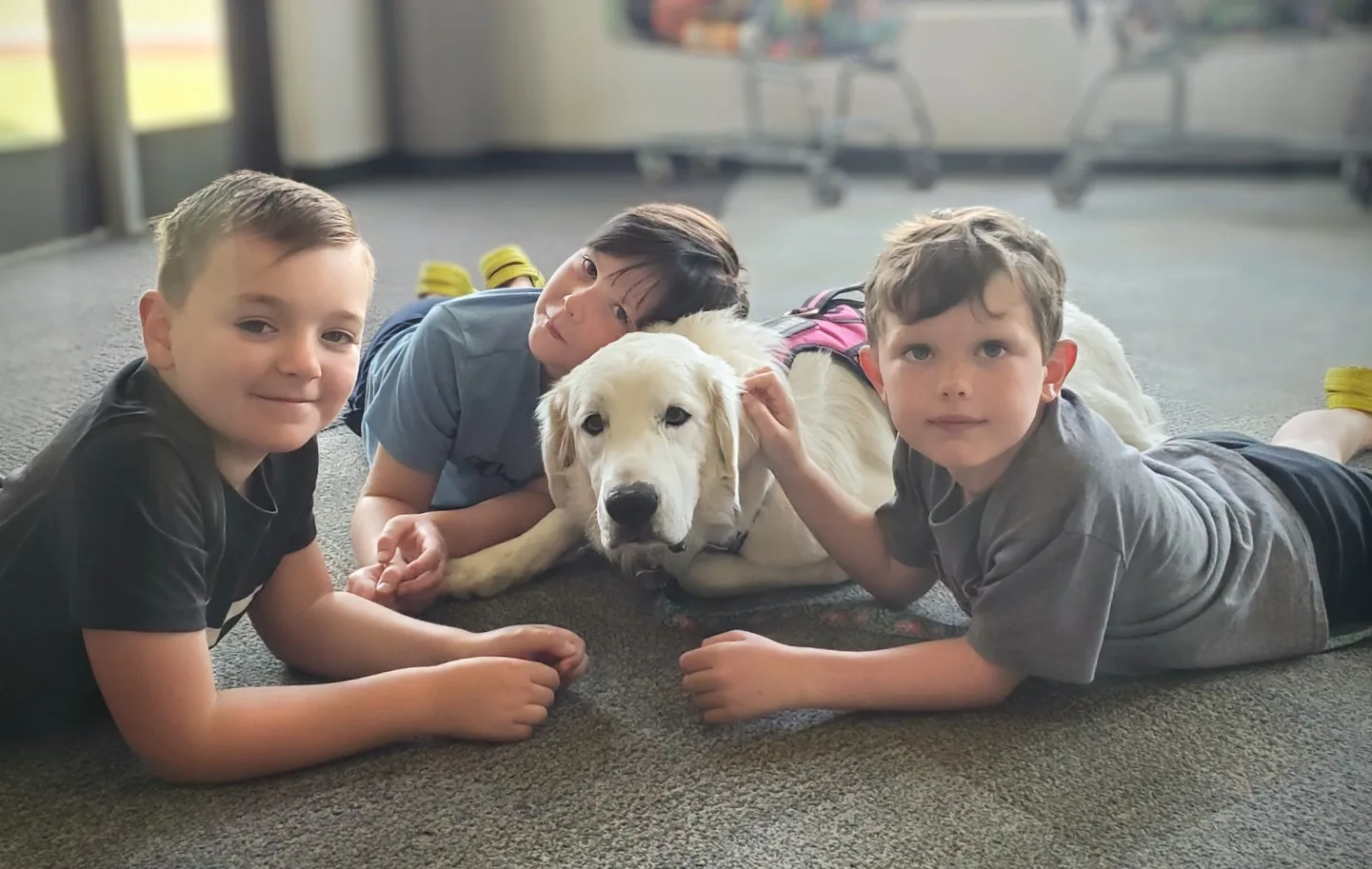
A growing therapy dog program is helping students navigate challenges and making a positive school culture even stronger.
by Sharon Bishop-Baldwin
New kids at school almost always attract attention, and that’s especially true if the new kids have fur and four paws.
But the leaders of a therapy pet program in Owasso Public Schools say that once the initial newness and excitement wore off, having dogs at school actually helped foster a calmer learning environment, particularly for students who struggle with emotional regulation.
In the past, if a child had a “meltdown,” the child was removed from the class until he or she was calm and in control of his or her behavior.
“What used to take a couple of hours to de-escalate now takes maybe 20 minutes with Luna,” said Rylee Zaragoza, the principal at Owasso’s Barnes Elementary School. “Kids are out of class for a lot less time.”
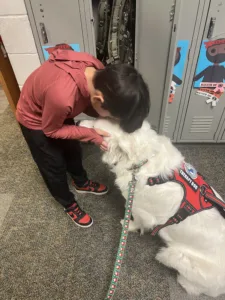
Barnes Elementary School was the first school in the district to welcome a therapy dog, Luna, in August 2024. The program has grown quickly, with the eighth dog joining Bailey Elementary School in August 2026. Two purebred Golden Retrievers, now about 6 months old, are also in training to join the program.
Other Owasso district schools that currently have therapy dog programs include Ator Elementary School, Northeast Elementary School, Morrow Elementary School, the 7th Grace Center and the high school.
Student meltdowns don’t occur every day, thankfully, but that doesn’t mean Luna doesn’t have her paws full with other tasks.
“School isn’t always a happy place for our little ones,” Zaragoza said, adding that even parental separation in the mornings can be tough for a lot of children.
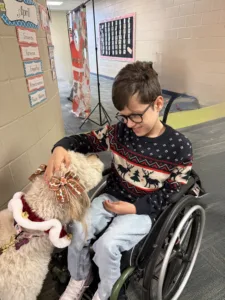
Luna greets the students when they arrive for school each day and also spends part of her day in the library, where all students have access to her. They can even read aloud to her if they want.
Zaragoza said Luna also will take part in small-group therapy-type situations with students and serves as a “buddy and a positive entity” for all students.
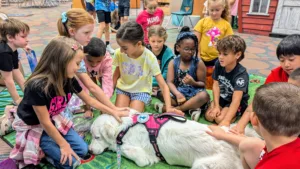
“It’s not just a ‘bring your dog to school’ kind of thing,” she said. “The dogs are working and having an impact when they’re there. They are fulfilling a need that oftentimes a human can’t fulfill. There’s a sensory impact.”
Maybe so, but they’re paid in love.
The students “rally around [Luna]. They’re happy to see her. They’ll seek her out,” Zaragoza said. “Not every kid needs to see her every day, but they enjoy it.”
And it’s not just the students. Zaragoza said she’s had teachers tell her that they’ve felt their blood pressure drop in Luna’s presence.
“When my teachers feel better, they do better for kids,” she said. “Just by her being there, she is encouraging them to be their best and to do their best.”
Zaragoza didn’t need any convincing about the healing powers of pets. As someone who volunteers in pet rescue work, she had studied research about the benefits of dogs in supporting student learning.
She had been working to plant that seed with district administrators when, two years ago, the opportunity presented itself, and a group of stakeholders considering a variety of new concepts ultimately approved the therapy dog program.
Zaragoza said what followed was a lot of meetings, discussion and study, including site visits to Morris and Oologah public schools, which already had therapy dog programs in place.
What never materialized was a great deal of pushback from district administrators, she said.
Zaragoza led a smaller group charged with writing the Owasso district’s policy, which puts the bulk of the oversight of the program in the hands of the principals at participating schools.
The district’s policy is extensive.
The dogs are owned by employees, not the school district. Each dog has a team of handlers at their school site. The dogs’ whereabouts at any moment are always known. Care must be taken around children and staff members who might be allergic to dogs.
The dogs must be vaccinated, and vaccination records and other certifications are checked annually. There are grooming requirements, and the dogs must undergo therapy dog training.
Other practical aspects, such as bathroom breaks, down time, food and water breaks, are also spelled out, although again, oversight of the program is largely left up to individual principals.
Not all of Owasso’s therapy dogs go to school every day, although Zaragoza said that is ideal.
“Dysregulated behavior doesn’t happen on a schedule,” she said.
And as a bonus, the students — at least some of whom don’t have pets at home — are learning proper behavior around pets and pet etiquette, skills the animals themselves already know.
But perhaps the biggest thing some students share with the dogs is their history of challenging situations, she said.
“Most of the dogs are rescues and have their own stories. The dogs aren’t perfect, but they can still do good things,” she said. “Kids are the same way.”
Knowing the dogs’ stories “gives the kids a feeling that they can do anything too.”
Zaragoza said having therapy dogs in the schools hasn’t just benefited the students with extra challenges though. It has improved the learning environment on a large scale.
“Our culture was wonderful before, but it’s excellent now.”