

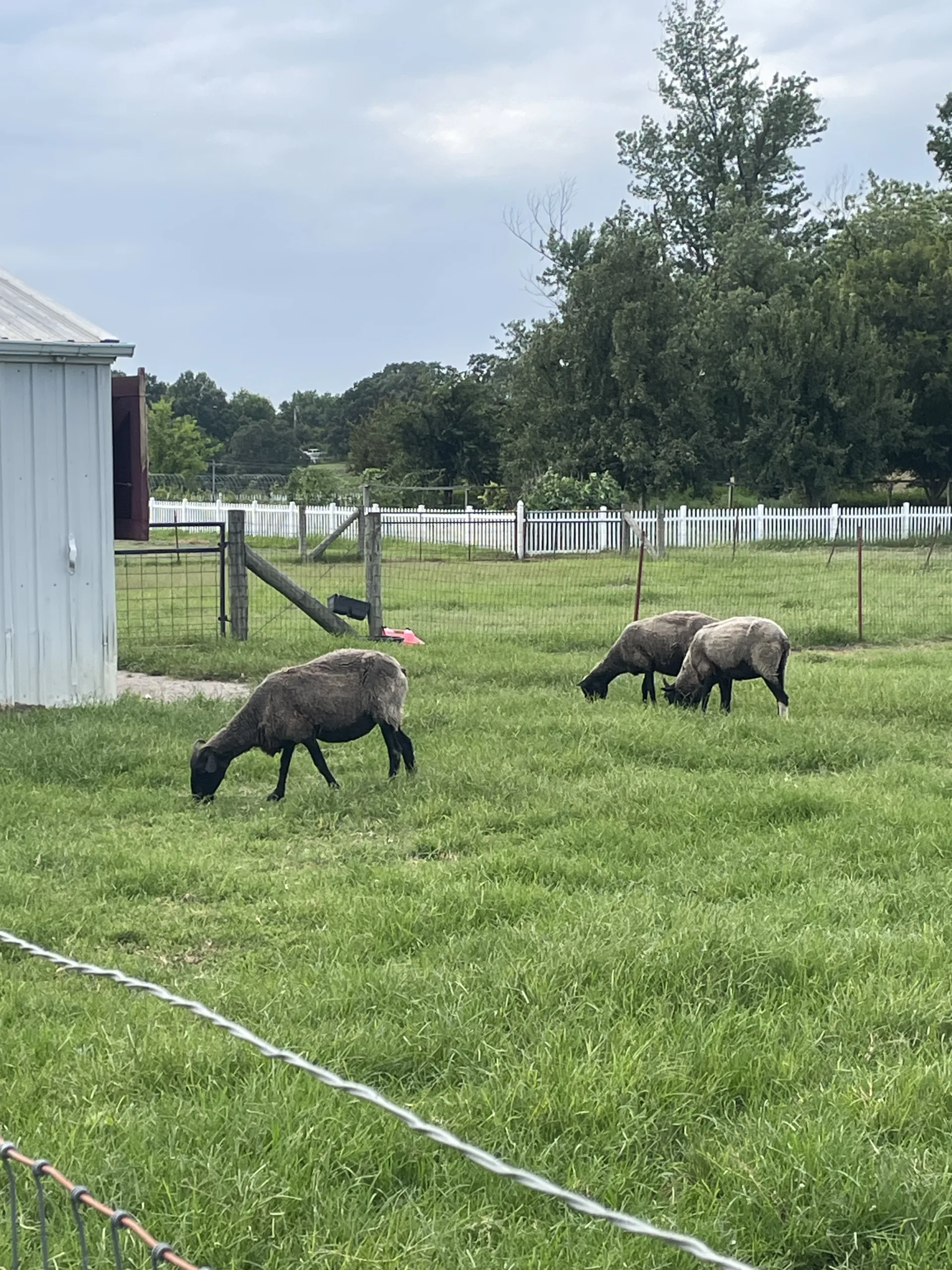
In this follow-up to last issue’s urban homesteading feature, learn how gardening, hands-on experience and small ruminants can help aspiring homesteaders grow their skills.
by Anna Holton-Dean
For many people, backyard chickens are the first step into urban homesteading. A small flock can provide fresh eggs, teach responsibilities and help families become more connected to where their food comes from.
But for those who enjoy caring for chickens and want to expand their skills, the question often becomes: “What comes next?”
According to Dr. Diane Dickinson, veterinarian and owner of Shepherd’s Cross in Claremore, a working sheep ranch, wool mill and agritourism destination with a faith-based mission, the answer begins with education.
Start With Gardening
While some people may immediately think about adding more animals, gardening is often a natural next step.
“Chickens are a great way to get started, and I am super excited we have seen chickens gain in popularity in folks’ backyards,” Dickinson says. “I think the next step for people, if they aren’t already doing that, is gardening.”
Gardening does not require a large piece of property. Even small-space gardening can help people learn the skills needed for future homesteading projects.
“We did container gardening on our patio, and it was amazing what we could produce in containers.”
Learning to care for plants can also help prepare people for caring for livestock, Dickinson adds.
Learn Before Adding Livestock
Taking the time to learn before purchasing animals can help ensure a better experience for both the owner and the animals.
“We live in this information era, and yet some of the information we might get for the next step for people on the homesteading-type journey might not be accurate,” Dickinson says. “So I would encourage people to gain knowledge from accurate sources and take some classes.”
Hands-on experience can also help people determine whether livestock is truly the right fit.
“We have animal husbandry classes, and we do classroom time and have hands-on training as well,” Dickinson says. “There’s a small percentage of people that when they get that hands-on training, they find out this isn’t for them. And it’s better to find out before you actually purchase animals.”
Books and online videos can provide information, but learning in person offers something invaluable.
“When we are learning things and using our hands, it’s so much easier to have someone modeling that right in front of us, showing us little techniques that fit our personality or our style a little better,” Dickinson says.
Considering Sheep or Goats?
Small ruminants, such as sheep and goats, are a good next step for those ready to move beyond chickens and gardening. These animals require less equipment than larger livestock, but they still require planning, preparation and daily care.
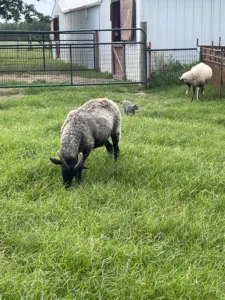
“Take at least one class in person, not online,” Dickinson says. “Have some hands-on experience. Make sure your family is all on the same page.”
Hands-on experience can also help people determine what type of livestock best fits their goals.
“We go through things like fencing, pasture rotations, supplements, choosing a breed, your purpose,” she says. “Why would you be raising them and that helps us to decide which breed or where we are going to purchase our livestock from.”
You Don’t Need Acres to Get Started
While many people imagine homesteading requires a large piece of land, there are ways to gain experience before making a major commitment. Dickinson emphasizes “again, take those classes, get some hands-on experience.”
Whether through volunteer programs or farm visits to working farms like Shepherd’s Cross, individuals and families can learn what caring for animals actually involves. The experience can be especially valuable for families.
“When they go out to have a homesteading experience, they are all on the same page,” Dickinson says. “The kids know what they’re in for, both parents better know how to begin and what this is going to involve.”
Interest in homesteading, traditional skills and raising livestock has grown in recent years, and Dickinson says it delights her to see.
“I think people are ready for a simple life, a clean life, a chemical-free life. We long for the simple days of yesteryear,” she says.
Homesteading is about more than producing food. Learning traditional agricultural skills also provides opportunities to learn responsibility, find purpose and reconnect with the natural world.
“People gain responsibility, life lessons, peace, contentment, relationships. I think they keep us emotionally stable,” Dickinson says. “They give us purpose.”
Before adding livestock, prospective owners should consider:
- Why they want to raise animals
- What purpose the animals will serve
- Whether they have appropriate space and fencing
- Who will care for the animals when they are away
- Whether everyone in the household is prepared for the responsibility